Vol. 1 – Death, Grief and Loss

Hopefully Helpful Hints for Parents, Caregivers, Educators, Counsellors, and Other Helpers When Reading This Book to Children
- This book is not a replacement for counselling services. If the child you are reading this book to is struggling with their thoughts and feelings regarding the issues in this book, it may be useful to seek out help from a qualified children’s counsellor or play therapist.
- Practice reading this book before reading it to a child. What questions do you think the child may ask? How might you answer?
- Give yourself enough time to read this book to a child. This book may bring up questions that require time for reflection. It is important to allow enough time to look at the images as some children are visual learners and this will help them to remember the content of the book. It is possible that the child you are going to read this book to may prefer to read the book in smaller chunks as well. Please do your best to follow their lead. There are also activities at the back of this book that will take some time to complete.
- Try to be a helpful listener. Helpful listening skills include:
- Listening instead of trying to think of a response while the child is talking. Use the silence in between the child’s statements to come up with your reflections.
- Reflect back what you think you heard them say. Often children will tell you if you have heard them accurately. An example of this is if the child said, “I wish I could talk to my uncle but he died. I want to tell him that I won my big soccer match,” you might say, “You miss having your uncle around to tell him about the things you are proud of.” If your reflection is incorrect, the child will often correct you and then you can try to give a more accurate reflection
- Give silent moments a chance. Embrace the silence. Silence provides an opportunity to come up with thoughtful responses and reflections.
- Be patient if questions get repetitive. Children will often ask the same question. They are trying to make sense of this new information in their brain. Help them out by repeating the same developmentally appropriate answer you gave before.
- Use developmentally appropriate language and examples in your reflections.
- Ask open-ended questions. Once the child has had time to express their thoughts and feelings and you have reflected them accurately by using your helpful listening skills, then perhaps ask a few open-ended questions. An example of a closed question would be, “Are you sad because you miss how your uncle used to come to your soccer games?” An open-ended question would be, “What do you miss about having your uncle physically around?” A closed question only leaves the option for a “yes” or “no” answer. An open-ended question will get you closer to the true feelings of the child.
- Try not to ask questions starting with the word “Why.” This may make the child feel like they have to defend their feelings. Think of how different it would feel to be asked “Why do you miss your uncle?” and “What do you miss about having your uncle physically around?” The second question will, most likely, make the child feel less defensive and will bring forward an opportunity for a bigger discussion on what makes the child miss his or her loved one.
- Try to avoid giving advice. Once you are done 1) reading the book, 2) being a helpful listener for the child’s thoughts and feelings, 3) reflecting the child’s thoughts and feelings, and 4) asking open-ended questions, then 5) this is where you could ask if the child wants to brainstorm ideas on ways to help them feel better. If the child says they are not ready to do so, respect this and do not attempt the brainstorming session at this time. What I have heard from people who are grieving is that sometimes they do not want to be taken out of their feelings. When further opportunities arise, ask if the child is ready to brainstorm ideas. Try to give options instead of advice. Let the child come to his or her own solutions. This will help build up the child’s self-esteem in decision-making and lead to the child feeling more capable of coming up with solutions to their problems.
- Normalize feelings. Share memories with the child about times you have been in a similar situation; how you felt at the time and perhaps how you feel about it now. These memories must be shared in an age-appropriate way. Make the memories short and to the point. Make sure that the focus remains on the child’s thoughts and feelings.
- Allow children to feel their feelings, even the uncomfortable ones. I have had many children tell me that an adult told them “not to cry” or to “toughen up.” It can be uncomfortable to watch a child, in pain, with sadness which can lead to statements like “dry those tears.” Crying can be healing. Perhaps help the child find a safe place to cry and let them know that you support them in expressing their feelings in a healthy way.
- When you share your feelings about how the child is feeling or acting, try to start by using the word “I” instead of the word “you.” It can also be helpful to use words like “seemed” when you are guessing about how the child is feeling. An example would be saying, “I felt worried when I saw that you seemed upset,” instead of saying, “You made me worried when you were upset.” The second statement sounds more like an accusation and the child may feel that they have done something wrong which may cause them to get defensive.
- Pick a calm time to read this book. Try to pick a time when there are little to no distractions. Try to ensure the child is well-fed, well-rested, and in a relaxed mood before reading this book. This is not always possible, but it would be ideal.
- Expect interruptions. Children are known to puddle jump in and out of feelings and only stay in them for as long as they can comfortably manage. If the child you are reading this story seems to becomes distracted, make a note of where you left off in the story and come back to it at a later time. Try to follow their lead.
- Create future opportunities for further discussion. Let the child know you are there to talk when they are ready. Then when the subject matter arises, this would be an appropriate time to talk about whatever issue is bothering the child.
- Try your best to remain non-judgmental. The best way to get a child to open up and continue to share their thoughts and feelings is to let the child know they are in a safe environment and are welcome to share thoughts and feelings without being judged.
- Try the activities at the end of this book alongside the child. They will need your help to understand some of the concepts and will need help gathering supplies. Doing these activities together will create opportunities for more conversation about the subject and will show that you are willing to help them process and express thoughts and feelings in healthy ways.
- Try not to use silver linings. Many children and families will tell me that, after they express their feelings, it is frustrating to have someone say statements like “At least you don’t have to…” or “It’ll all work out.” These statements are typically made out of love and wanting to reduce others’ pain, but can make others feel as though their pain is not legitimate; as though it should be silenced. As hard as it can be to resist the urge to give someone a silver lining, try to instead be with the person, empathize with their feelings, and listen intently.
- Remember that people grieve in many different ways. It is important to remember that not all people will grieve in the way that you would. Since people may grieve differently, the activities at the back of this book may not be as useful to some of the children who read this book with you. It may be helpful if you support them in finding a healthy way to grieve that feels right for them. Some ways I have seen children grieve are: talking, listening, creating stories, coloring, painting, playing, scrapbooking, movement, sewing, drawing, writing, walking or being in nature, listening to or making music, making arts and crafts, and doing anything in memory of their loved one who died.
Self-Care for the Parents, Caregivers, Educators, Counsellors, and Other Helpers Reading this Book
It is important, as a reader of this book, to process your own thoughts and feelings about the subject matter presented in this book. Please try some of the suggestions below to help you process and express your thoughts and feelings in healthy ways.
- Find time for yourself to process your thoughts and feelings about the issues presented in this book. This should be done on your own or with other adults.
- In your everyday life do what you need to bring you feelings of calm or peace.
- Reach out for support. Perhaps you could call a trusted friend or a family member, connect with a counsellor, or join a support group.


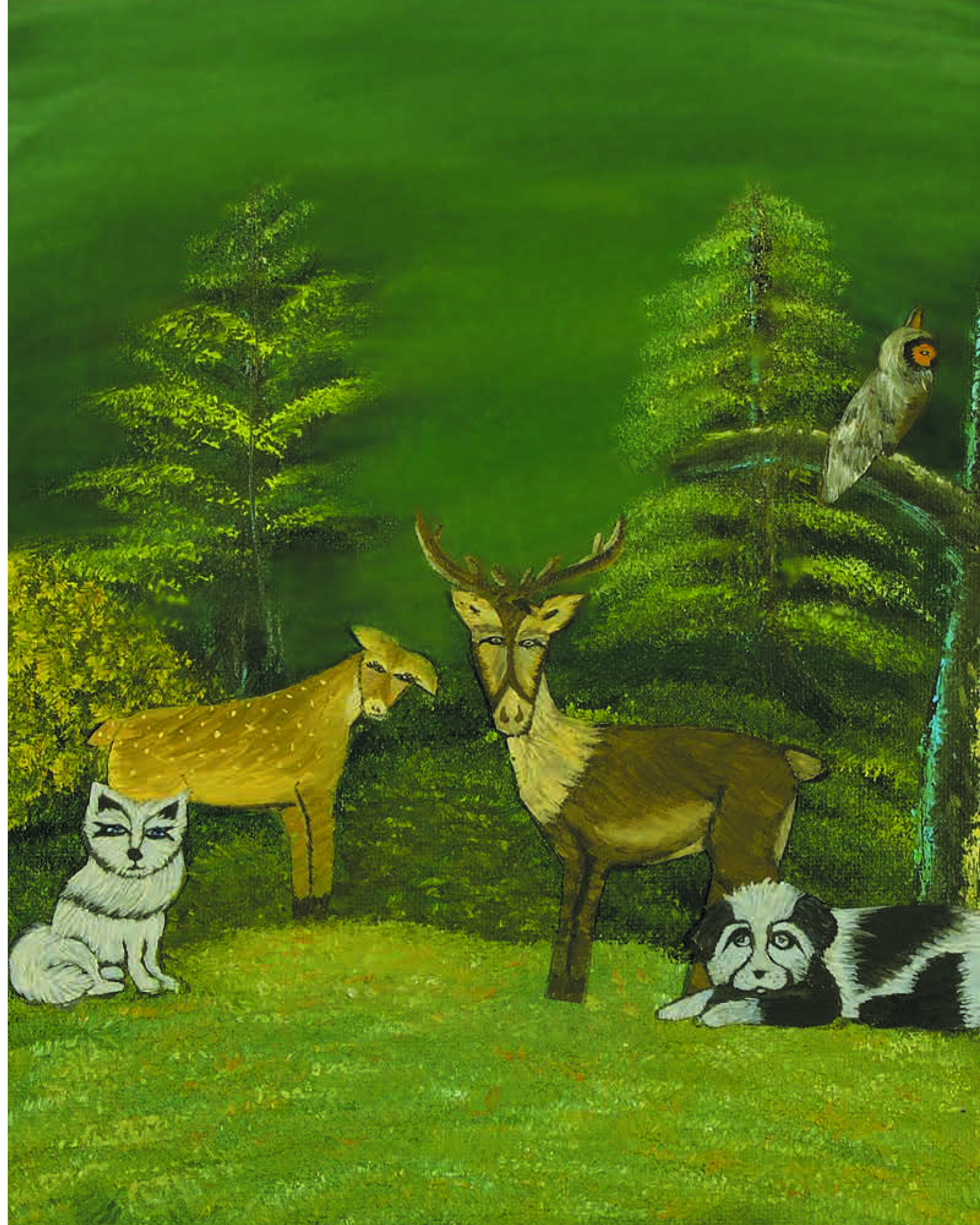
One day, in Woodland Woods, far far away, lived an Arctic Fox named Ann.
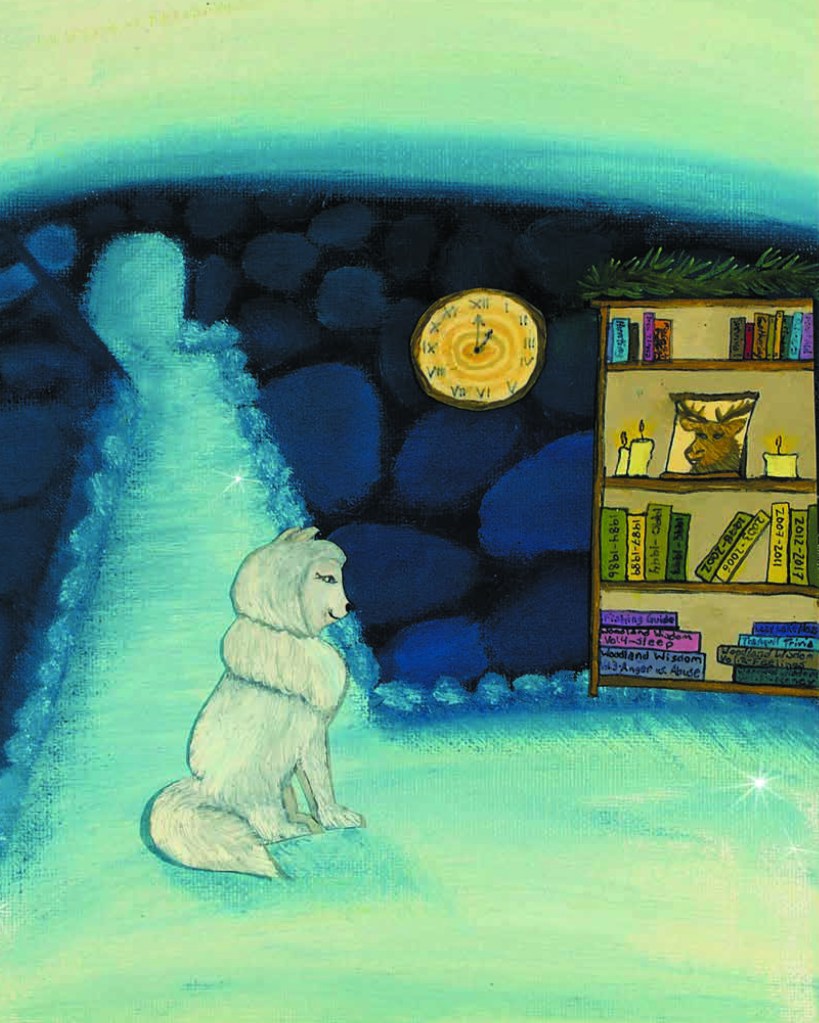
Ann lived a mostly happy life. She had a warm place to sleep as her den was far under the surface of Cold Mountain. Ann was a counsellor and helped Woodland Woods in many different ways.
Lately, Ann was feeling sad. She heard the great Elk had died. Ann knew many animals in the community would be heartbroken about the great Elk dying.
Since Ann wanted to help the woodland community, she started a group for all the animals that wanted to express their feelings.
She invited any animal who wanted to be in a space with others remembering someone they knew who had died.
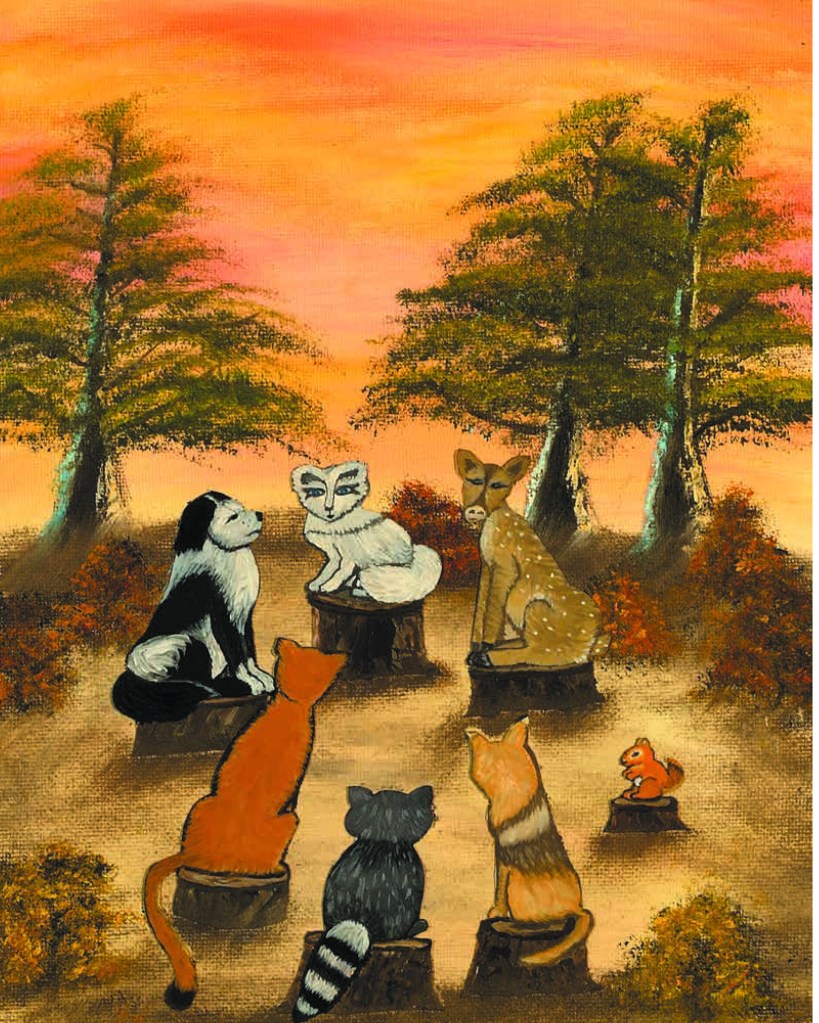
Ann the Arctic Fox called it the “Grief Group” and many animals showed up to talk about how they felt.
Ann started by saying that grief is the experience we have when something or someone, that is important to us, is no longer physically in our lives.
She said there is no one way to grieve, and you may choose to express your grief differently than others around you.
Ann invited everyone to share what they felt safe and comfortable sharing if they wanted to share.
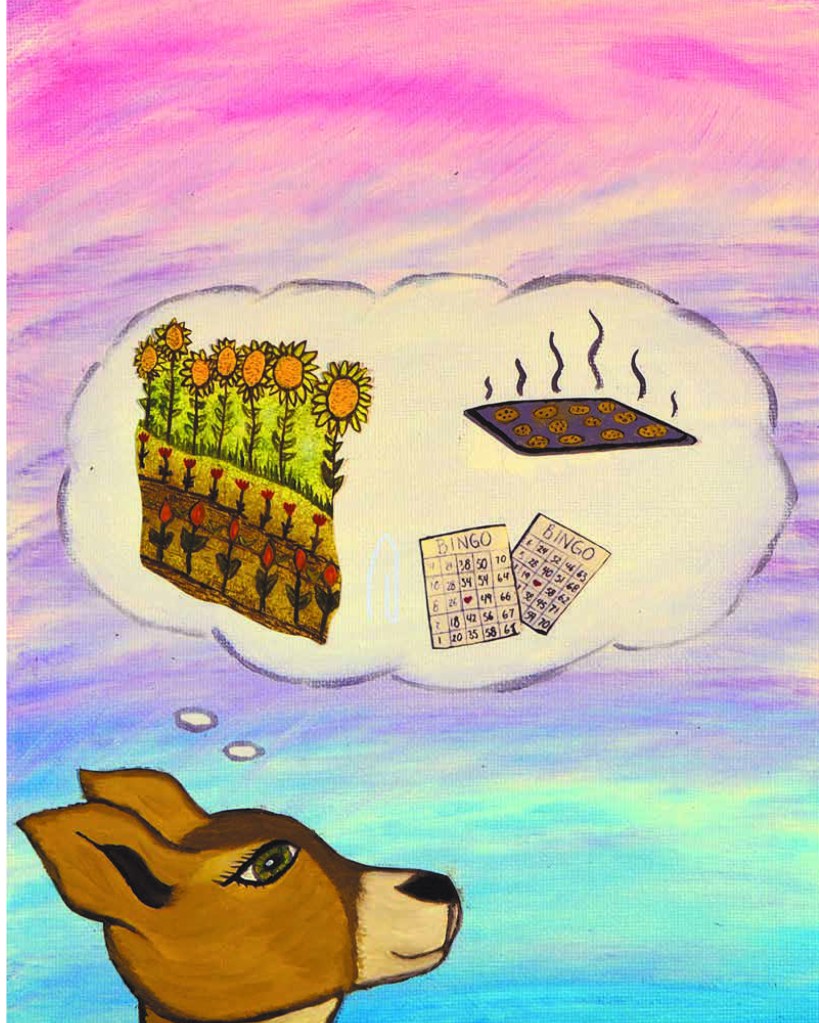
Dallas the Deer talked about her Granddeer who died.
She said, when she was a young doe, she used to love to garden, bake, and play bingo with her Granddeer.
She said, every night, she cuddles up in a blanket her Grandeer made for her with special hooves warmer pocket to keep her toes cozy.
She said that whenever she gardens, she feels connected to her Granddeer.
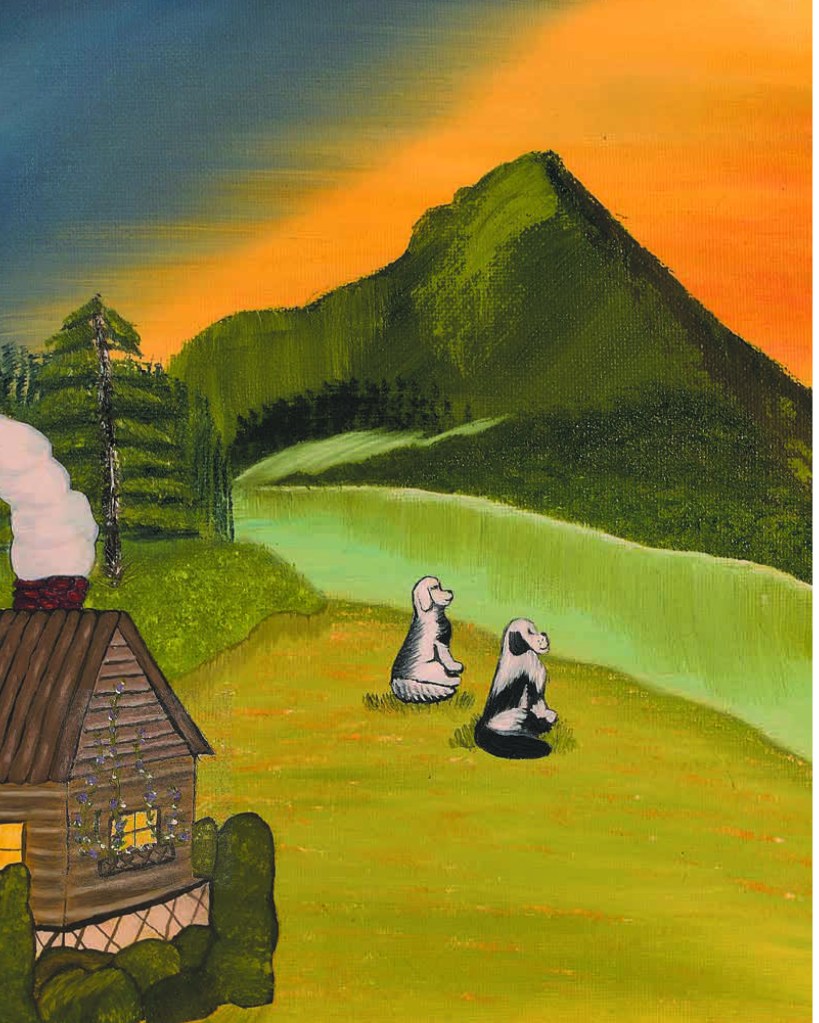
Nicholas the Newfoundland Dog shared a story about his Aunt who died many years ago.
He said she was the coolest.
Nicholas talked about how she would speak with him like he was a grown-up even when he was a young pup.
Nicholas said he thinks of her often and tries to find ways to continue his bond with her. So, he decided to give his Aunt’s name to his young pup.
Kathy the Caribou shared about her Dad who died a few years ago. She said she misses her dad often.
Kathy said she keeps pictures of her dad, in her reading room, to see his face and remember times they shared.
Many other animals shared. They said it felt good to share with others who shared similar experiences.
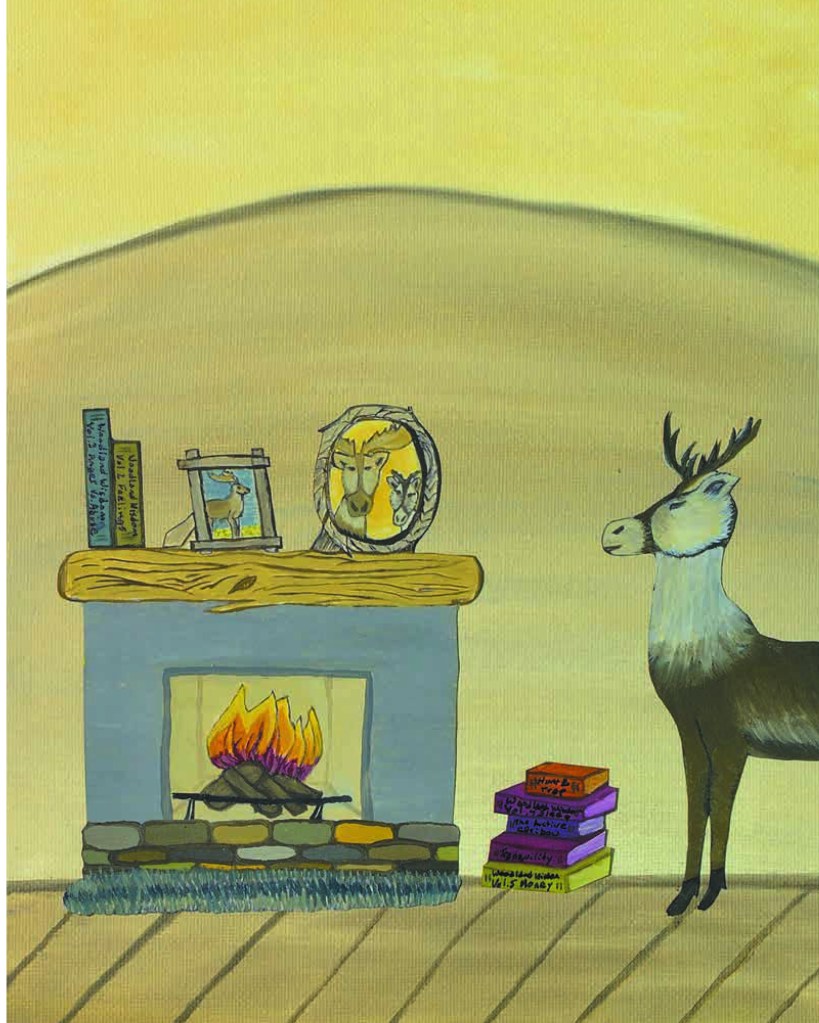

Ann asked the Grief Group if they would like to go do an activity on a field trip for the next time they met. The group agreed. She asked everyone to bring a piece of fabric that reminded them of their loved ones.
The next week, they went on a walk between Lazy Lake and Slippery Swamp and then over Butterfly Bridge.
They sat down on Mindful Mountain with a beautiful view of butterflies and peaceful sounds from Calming Creek.
Ann invited the group to sew the fabric they had brought to the bottom of a quilt to make a pocket warmer for their paws or hooves like Dallas’ Granddeer had made.
This way, whenever they would like, they could bundle themselves up in their cozy remembering quilts and hopefully feel connected to the loved one they are remembering.
While they sewed and enjoyed the peaceful environment, more animals shared about their loved ones.
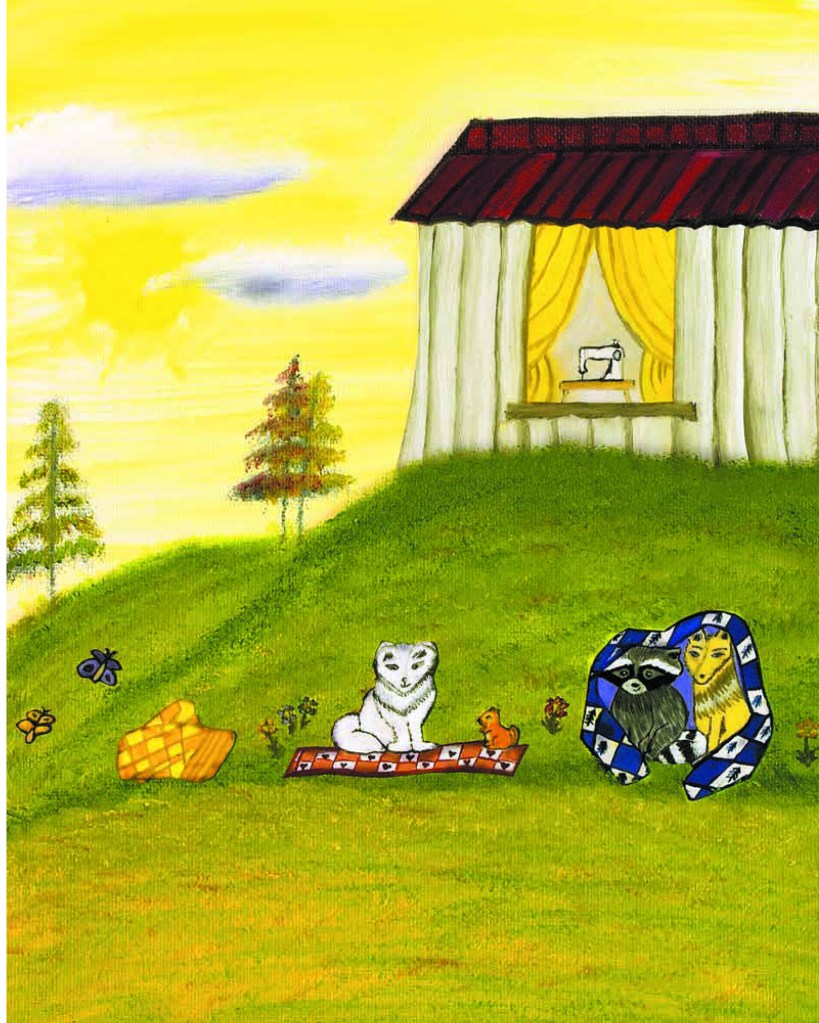
Kelcey the Cougar talked about her friend who died when she was far too young.
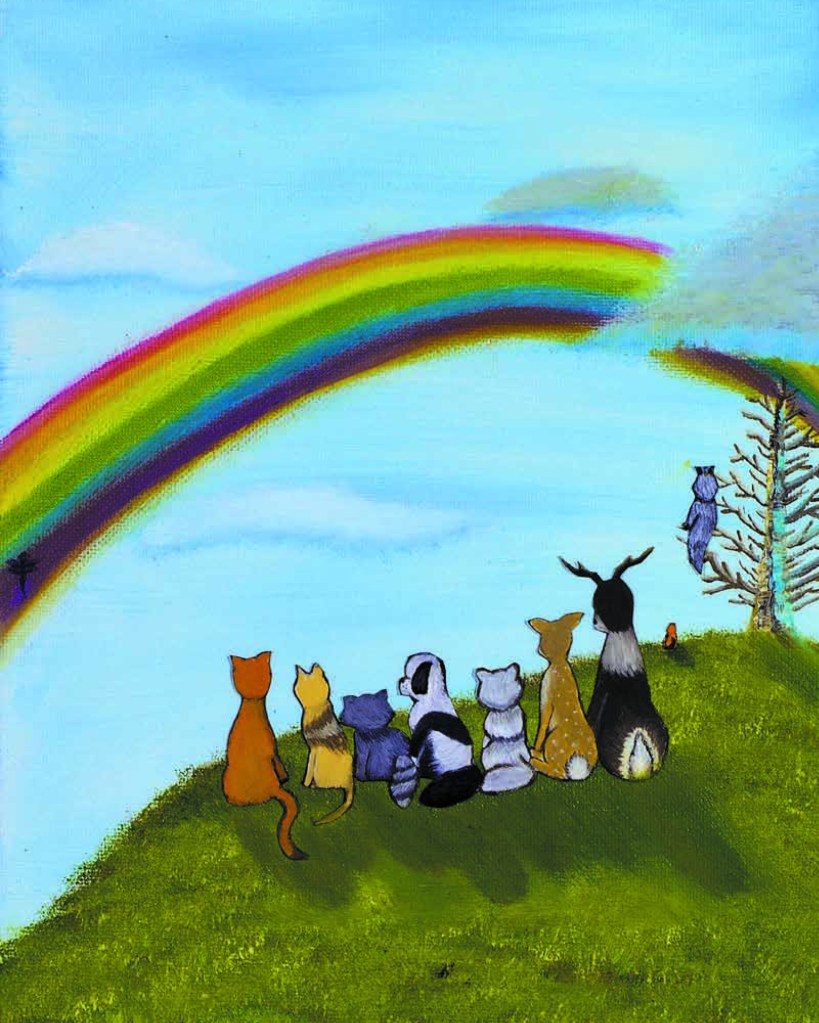
She said that this friend cared so much for all animals and you could feel her love shine through clouds like a rainbow.
Whenever Kelcey sees a rainbow or dragonflies she thinks of the fun times she shared with her friend.
Amanda the Arctic Hare shared stories about a friend who died.
She said that her friend loved to tell jokes and help others feel joy.
Amanda said she used to watch her friend play baseball on warm sunny days and now whenever she watches a baseball game she feels connected to him.

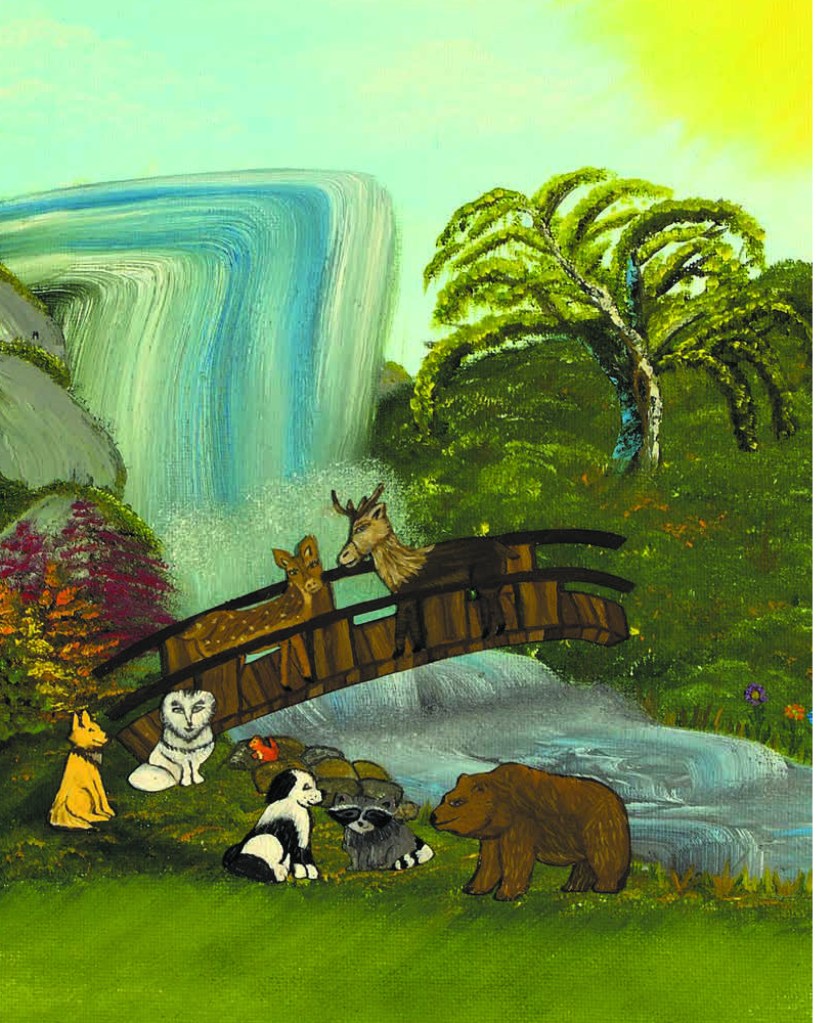
Ann talked about how animals can die in many different ways. Whatever the reason may be, when someone dies others may feel many feelings. Ann said it may be helpful to share your grief with someone you trust.
She said it may also be helpful to find ways to continue to connect with the loved ones they are remembering.
The group sat by Calming Creek on Mindful Mountain and shared memories of the great Elk and all the other animals that had died. Some animals, like Sheila the Squirrel, listened.
Ann said many animals show their grief differently. Some talk, some prefer to listen, some make arts or crafts, some bake, or some might run a race in memory of their loved one. There are many ways to express your grief and you should find the one that feels right for you.
Ann let the group know they may feel more grief when special days come up, like on their birthday.
Another time our grief may feel stronger is when big things happen in our lives we wish the loved ones we are remembering were physically present for, like getting our first job or graduating.
Ann shared that just as your love for the person you are remembering will never go away, grief will also not go away. It may change, shift, and move in ways, but just like your love, it will always be with you.
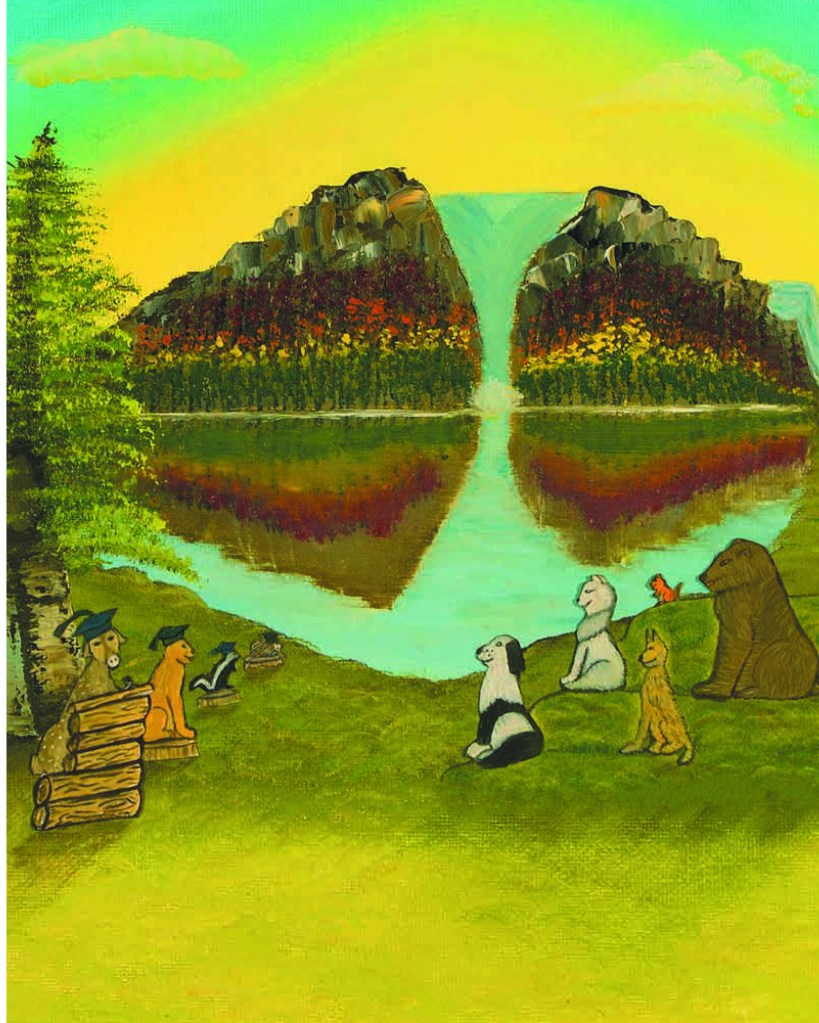
As the Grief Group finished their cozy remembering quilts, they talked about their worries for the future without their loved one physically present, memories of times they shared together, and how good it felt to share about the loved one they miss, in a safe and understanding environment.
The group agreed to meet once a month on Mindful Mountain to share memories and help support each other.
Ann was pleased with how helpful the families of Woodland Woods found the Grief Group and so she went back to living her mostly happy life.
Until we meet again for another story in Woodland Woods…
The End
To try some activities I have found helpful to express feelings, check out the links below.
Hopefully Helpful Activities To Go Along With This Book
Here are some activities you can try to help process and express feelings in healthy ways. Hope you find them helpful!


 Dallas Shirley